
How to choose a Jang seed roller
Two things set in-row spacing on a Jang seeder: the number of holes in the roller and the sprocket pair in the chain box. The roller’s letter sets the hole size, which has to fit your seed. Here’s how to pick all three.
Reading a roller code
Every roller has a letter-number code, like LJ-24.
- The number is how many holes are in the roller (24 here). Together with the sprockets, it sets spacing.
- The letters are the hole size and shape (LJ = 7.5 mm wide, 3.7 mm deep). They have to match your seed.
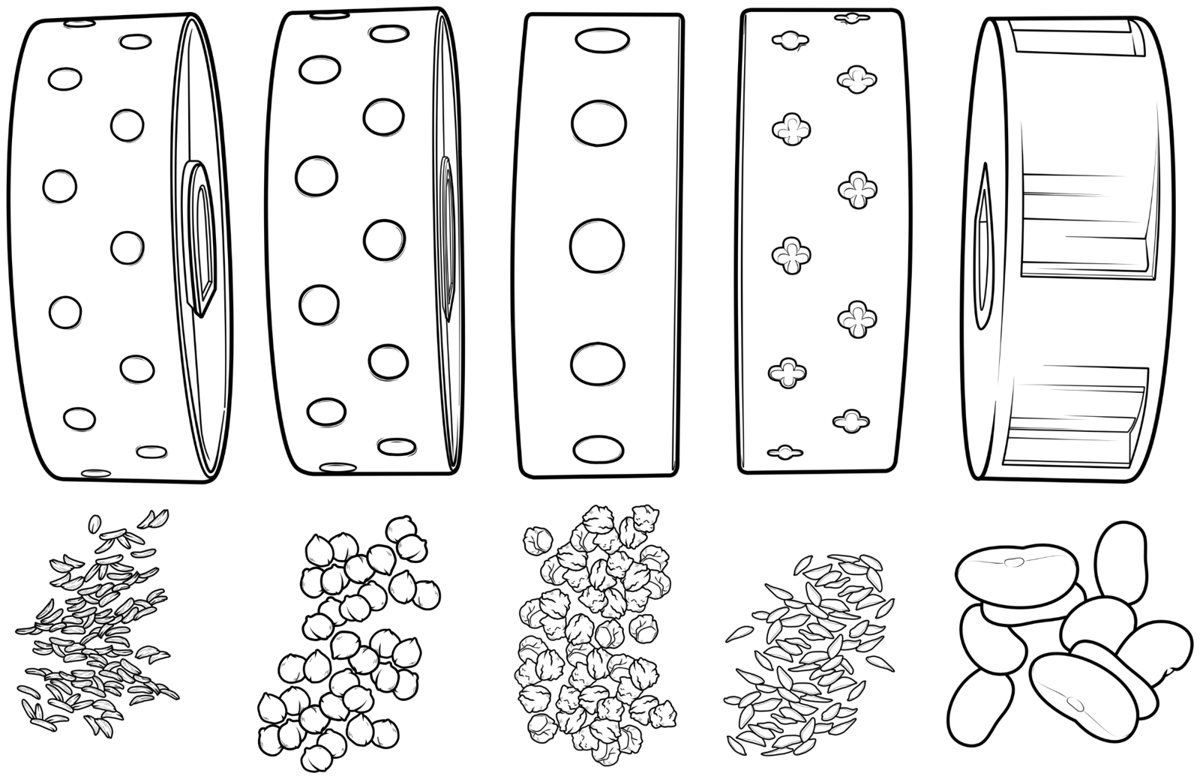
There are more than sixty JP rollers, in bowl, V-groove, cross and other shapes, all in static-resistant plastic. Most growers use the same handful: the seeding chart shows which.
Pick the spacing, then the hole count and sprockets
Find the spacing you want (inches between seeds) in the chart. Read left for the number of roller holes, and up for the sprockets. This chart is also printed on the chain box cover of every Jang.
| Rear sprocket | 14 | 14 | 13 | 13 | 11 | 11 | 11 | 10 | 10 | 9 |
|---|---|---|---|---|---|---|---|---|---|---|
| Front sprocket | 9 | 10 | 10 | 11 | 10 | 11 | 13 | 13 | 14 | 14 |
| 3 holes | 20 | 18 | 17 | 15 | 14 | 13 | 11 | 10 | 9 | 8 |
| 4 holes | 15 | 14 | 13 | 12 | 11 | 10 | 8 | 7.5 | 7 | 6 |
| 6 holes | 10 | 9 | 8 | 7.5 | 7 | 6.5 | 5.5 | 5 | 4.5 | 4 |
| 12 holes | 5 | 4.8 | 2 | 4 | 3.5 | 3 | 2.8 | 2.5 | 2.5 | 2 |
| 24 holes | 2.5 | 2.5 | 2 | 2 | 1.8 | 1.5 | 1.3 | 1 | 1 | 0.5 |
Example: for 2.5″ between seeds, a 24-hole roller with the 14 in the rear and the 9 in the front. You could also use a 12-hole roller with 10 rear and 13 front. Pick the combination that lets one roller cover the most crops: a 24-hole roller covers about 0.5″ to 2.5″, a 12-hole 2″ to 5″, a 6-hole 4″ to 10″.
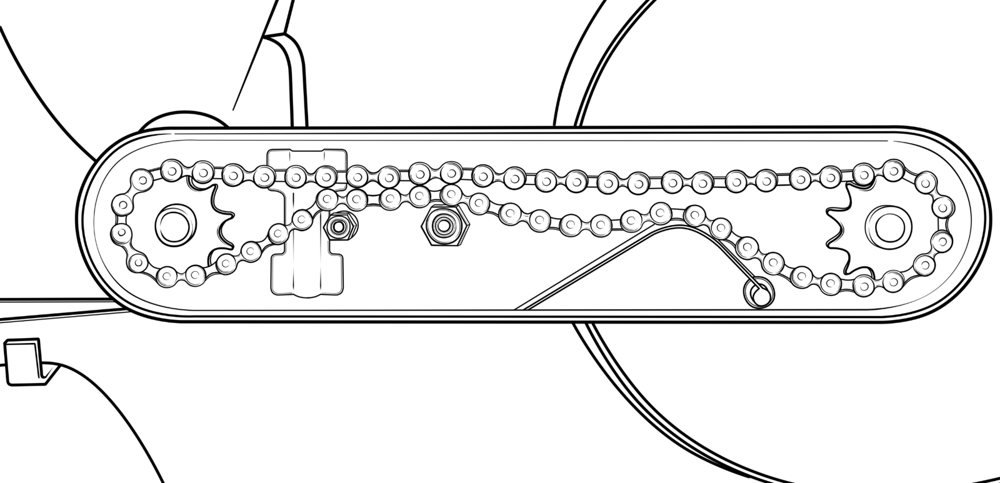
Every JP1 and JP5 comes with six sprockets: 9, 10, 11 (two), 13 and 14 teeth. Loosen the two white screws on the chain box cover; the sprockets and chain swap by hand, no tools.
Match the hole size to your seed
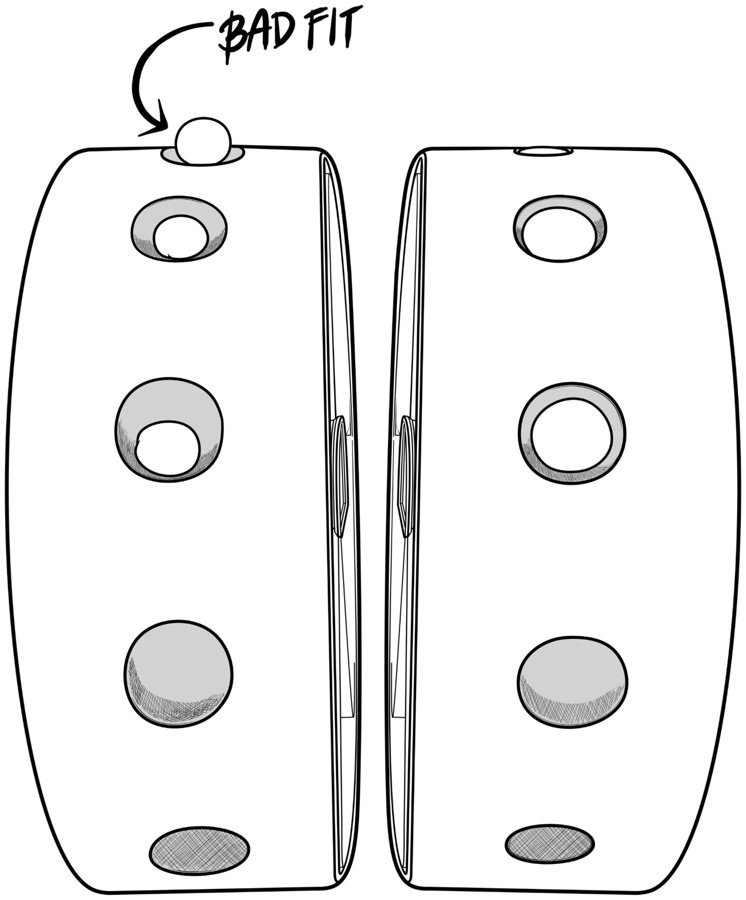
Measure your seed with the gauge built into the hopper lid (or a ruler). Use the largest seeds in the packet. The seed should sit just below the roller surface or flush with it. If you want several seeds per hole, they should all fit without mounding above the surface.
When two letters have the same width, choose the deeper hole. Example: okra seed that measures 7 to 9 mm calls for a G roller.
| Letter | Hole width (mm) | Hole depth (mm) |
|---|---|---|
| A | 13.5 | 6 |
| AA | 12 | 6 |
| B | 10 | 7.5 |
| BL | 10 | 7.5 |
| C | 11 | 5.5 |
| R | 9 | 3.5 |
| G | 9 | 4.5 |
| Q | 8 | 3 |
| LJ | 7.5 | 3.7 |
| L | 7 | 2.5 |
| LV | 8 | 5 |
| MM | 6 | 2.5 |
| MJ | 6 | 3.5 |
| M | 5 | 2 |
| F | 5 | 2.5 |
| X | 4 | 2 |
| Y | 3.5 | 1.5 |
| YYJ | 3 | 1.7 |
| YX | 2.5 | 1.5 |
Set the brush and guide plate
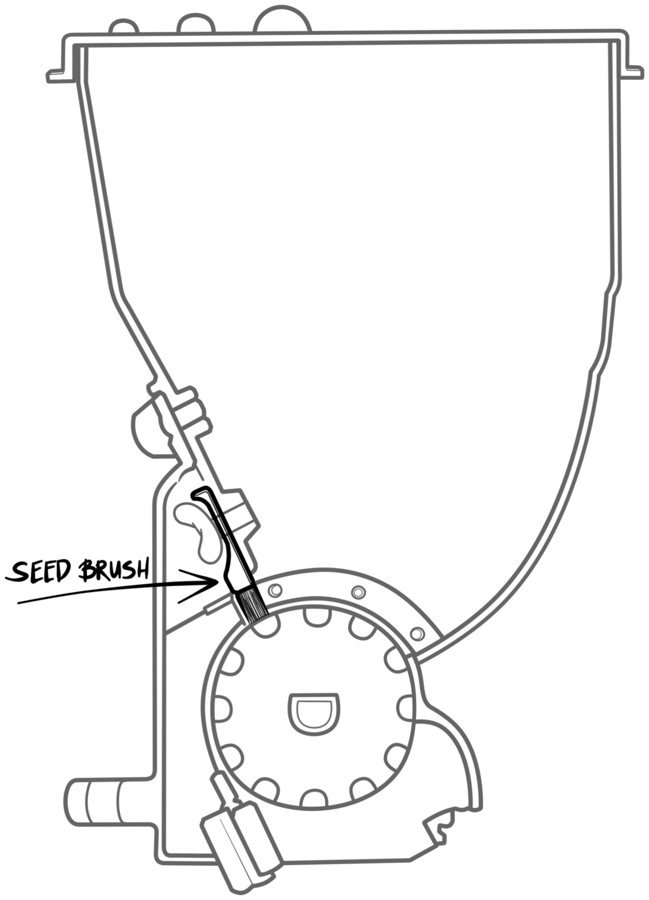
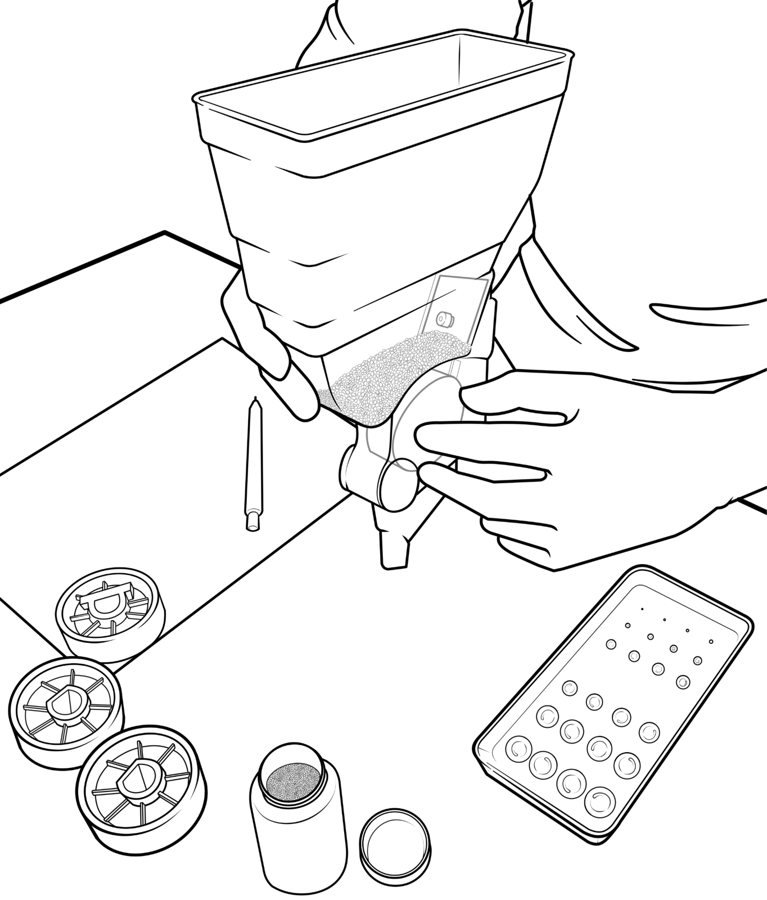
Brush: start with it down, just clear of the roller. That gives the most accurate singulation. Raise it only for irregular seed like beets and chard, which can jam or break; raising it too far drops too much seed. Loosen the wingnut on the removed hopper to move it.
Guide plate: the curved felt insert helps smooth, round or pelleted seed. Remove it for odd-shaped seed such as lettuce, carrots and beets, which can catch on the felt.
Test before you go to the field
- Take the hopper off the seeder and add a handful of seed.
- Set a small bowl under the seed tube.
- Turn the hopper sprocket by hand.
- Watch every hole: skips or doubles mean the wrong hole size or brush height.
- Write down what works for each variety.
Common questions
Do I need to buy sprockets?
No. The six sprockets come with every JP1 and JP5.
Can I use one roller for several crops?
Yes, if the seeds are a similar size. A 12-hole roller can seed one crop at 2″ and another at 5″ just by changing sprockets. Choose the fewest rollers that cover your crop list.
No roller fits my seed. What now?
Blank rollers let you drill your own: divide the 7-3/8″ roller circumference by the number of holes you want, drill slightly wider than the seed, and stop when the seed sits just below the surface. The Jang Seeder Handbook walks through it, or email hello@moderngrower.co for help choosing.
Which seeds don’t work well?
Long or irregular seeds (many flowers), flat flaky seeds (tomatoes, peppers), very tiny seeds (amaranth) and very large flat seeds (pumpkin, lima beans).
The Jang Seeder Handbook
Free 14-page guide: parts, sprockets, rollers, multi-row seeders, comparisons, tips and care.
Jang tech sheets
JP1, JP5, and rollers & sprockets, one printable page each.
Shop Jang seeders
JP1, JP5, seed rollers, hoppers and accessories at Modern Grower.